
Inside the Minds of B2B Tech Leaders: The Real AI Adoption Dilemmas
“Right now, [AI for] productivity doesn’t warrant investment. Yet, there is still a degree of, ‘We can’t fall behind too far, so we need to invest.’”
A Year-End Reflection on Customer Advisory Board Conversations in 2025
This paradox—that “AI doesn’t warrant investment” but “we can’t fall behind”—captures what I heard from B2B executives in customer advisory board meetings throughout 2025.
For enterprise technology firms, customers understand AI's importance, but struggle to justify investment and drive the organizational change necessary to achieve transformative results.
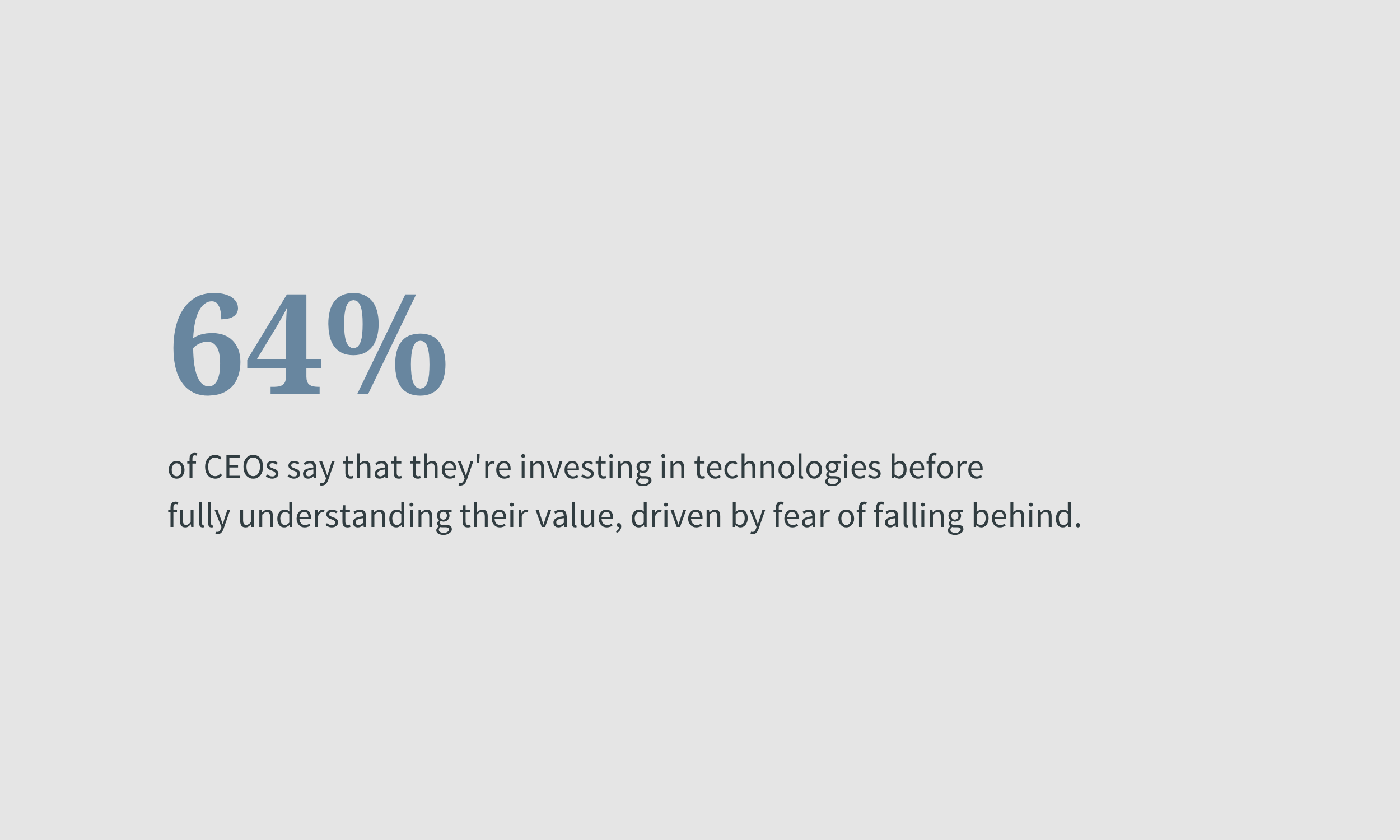
Technology vendors can demonstrate quick efficiency gains—particularly with generative AI—but organizations aren't experiencing sustainable, repeatable results…yet.
The gap isn't about product capability; AI is not an "off the shelf" purchase for large enterprises. Customers are wrestling with concerns that don't fit into product demos. They're asking strategic questions that require nuanced answers from humans, not features.
In our facilitated discussions with senior executives, the barriers to AI adoption at scale are rarely about functionality or pricing. They're about organizational realities.
“The technology is easy; the people and process...very hard”
Every quote I’m sharing here came directly from B2B executives in advisory sessions this year, giving voice to what we also read in industry research.
The AI Barriers Your Buyers Experience
Our 2025 advisory board meetings highlighted five constraints gating AI adoption:
Leadership & Organizational Alignment
ROI Measurement & Value Definition
Workforce Transformation
Technical Debt & Legacy Infrastructure
Regulatory Compliance & Risk Management
Leadership & Organizational Alignment
Who and What Drives AI Strategy?
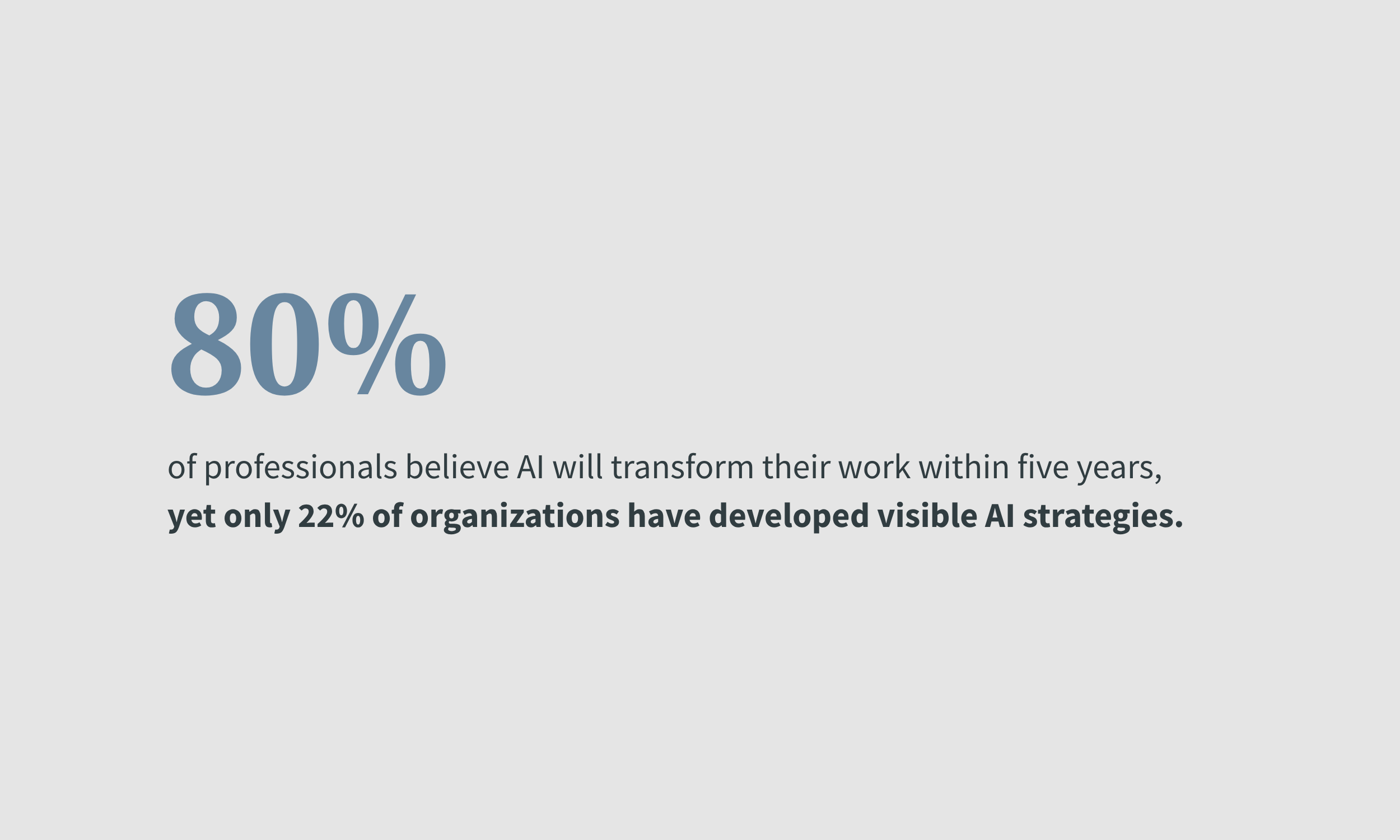
"If [AI transformation] is not driven by the CEO, it's not going to work at any firm."
"For the ROI discussion to get to a different level, we need CEO-level sponsorship."
"My CEO is engaged but not yet driving it from the top. I get more questions about money savings [than strategic integration]."
Successful AI strategy can’t be driven more by a fear of missing out than by clarity of what we want to DO with it. The executives in our meetings believe AI will succeed when CEOs treat it as strategic transformation, not technology implementation. Without executive-level sponsorship, AI initiatives remain tactical experiments rather than competitive advantages.
Enterprise customers want to understand:
What becomes possible that wasn't before?
How do we move beyond efficiency gains and pursue exponential outcomes?
How does this change our competitive positioning, not just internal operations?
What dependencies are we creating versus what control are we maintaining?
What risks are we accepting versus what risks are we mitigating?
ROI Measurement & Value Definition
The Problem of Metrics
"We're spending more on AI than we're getting back right now... We cannot afford NOT to do this, but it's hard to put a number on ROI."
"We have productivity measurements from our past life, but we must look at AI through a new lens."
"I get asked daily about where I'm reducing to pay for AI."
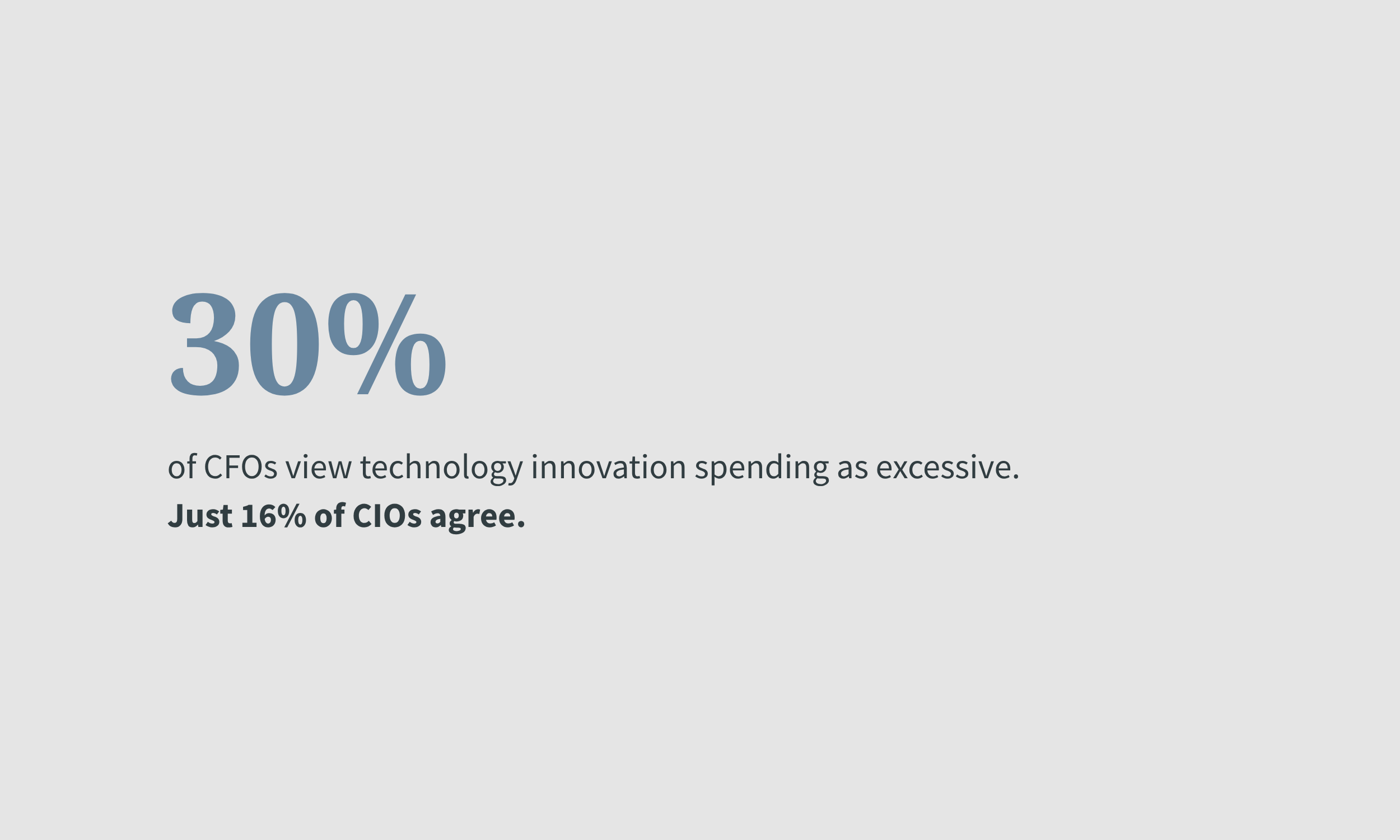
AI-enabled efficiency matters, but it's rarely sufficient justification for investment.
Organizations face a measurement paradox: traditional productivity metrics can't capture AI's transformational value. This creates a bind, particularly when working in what is already a "hyperinflationary environment" for IT spending.
As one CIO reported, "It used to be good if IT costs were flat year-over-year. Now we assume a 6-8% growth rate before we do anything."
CXOs need AI investments to deliver more than incremental efficiency gains when baseline infrastructure costs are already rising this much annually. They need to invent new sources of value.
Source: Kyndryl 2025 Readiness Report
Workforce Transformation & Organizational Change
The Human Side of Automation
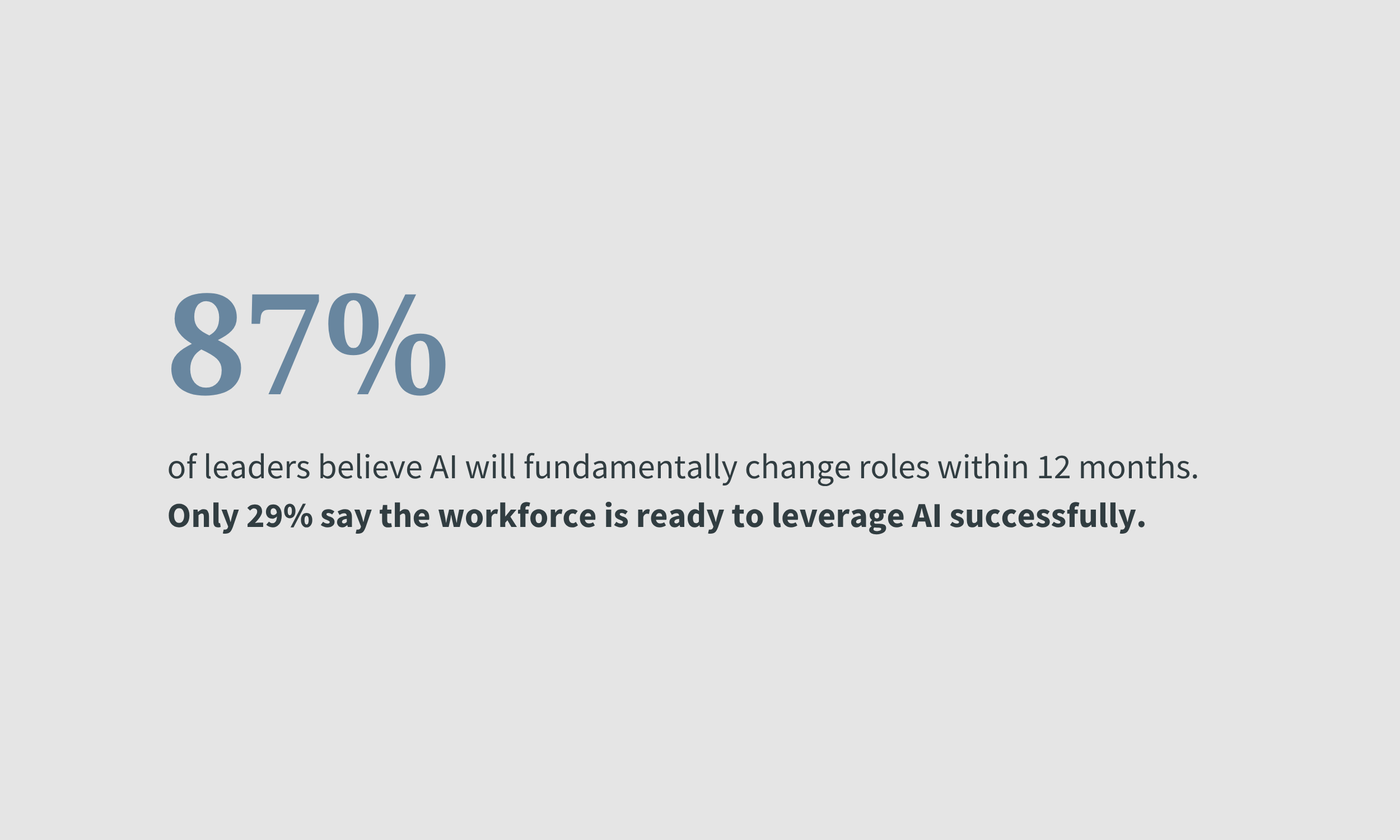
"Where we can handle 5x the volume with the same number of people, what do we do? Do we just fire people? Do we retrain or change the role?"
"Compensation in many industries is directly related to tenure and experience... this turns the entire thing upside down. Do we pay somebody who is very good at using one of these tools significantly more than someone 10 years in the job?"
AI forces uncomfortable questions about what organizations value: experience or proficiency, people or productivity, current culture or future capability.
Should we value AI proficiency more than years of experience?
What does it mean to manage an workforce of AI agents?
How do we preserve human strengths like curiosity, care, collaboration, and critical thinking?
And what does all of this mean for career paths, retention, and organizational culture?
Source: Kyndryl 2025 Readiness Report
Organizational & Technology Debts
The Compounding Problem of Tech Complexity
"We have data debt, we have process debt, and we have technical debt."
"With agents requiring perfect data—99.98% is not good enough—there's a real risk of 'agenticizing' and amplifying bad workflow and decisions."
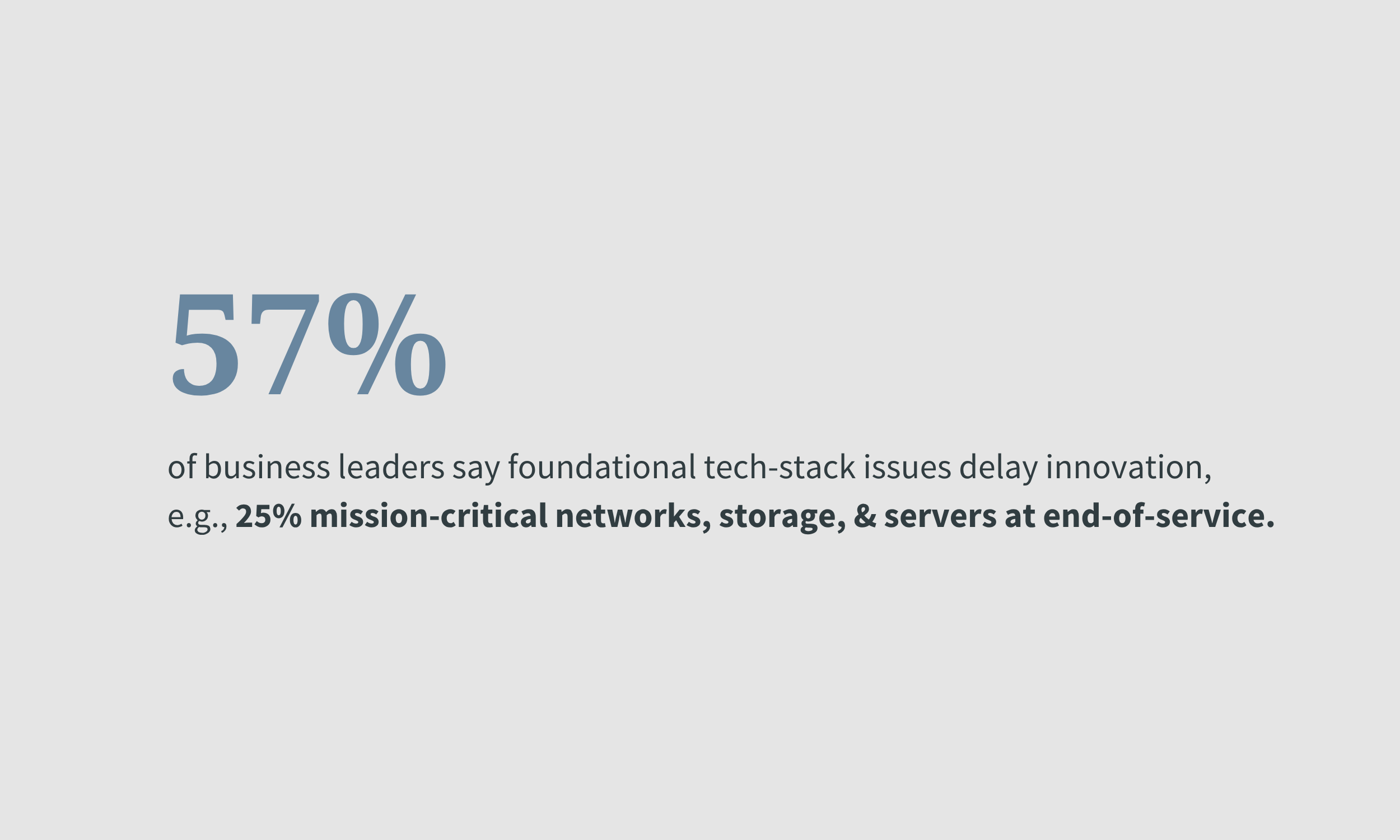
Advisory board members regularly described the accumulated inefficiencies and deferred improvements that threaten AI implementation and integration. While companies may apply AI to leapfrog some of these debts, executives recognize that AI deployment could just as easily amplify existing organizational problems. Organizations already spending enormous sums on technical debt face a choice: address these underlying issues before deploying AI at scale, or risk encoding inefficiencies into automated systems that will be even harder to fix later.
Source: Kyndryl 2025 Readiness Report
Regulatory Compliance & Risk Management
Innovating within Non-Negotiable Constraints
"We can never get to a point where something is done without a human in the loop. Agentic AI will never make a decision because we can't explain that to a regulator."
"The regulatory bar means it's not an option for us to keep things unlocked. We funnel every AI use case through central guardrails. If we didn't invest the time and energy into [this kind of] governance, we'd lose the ability to use AI across the company."
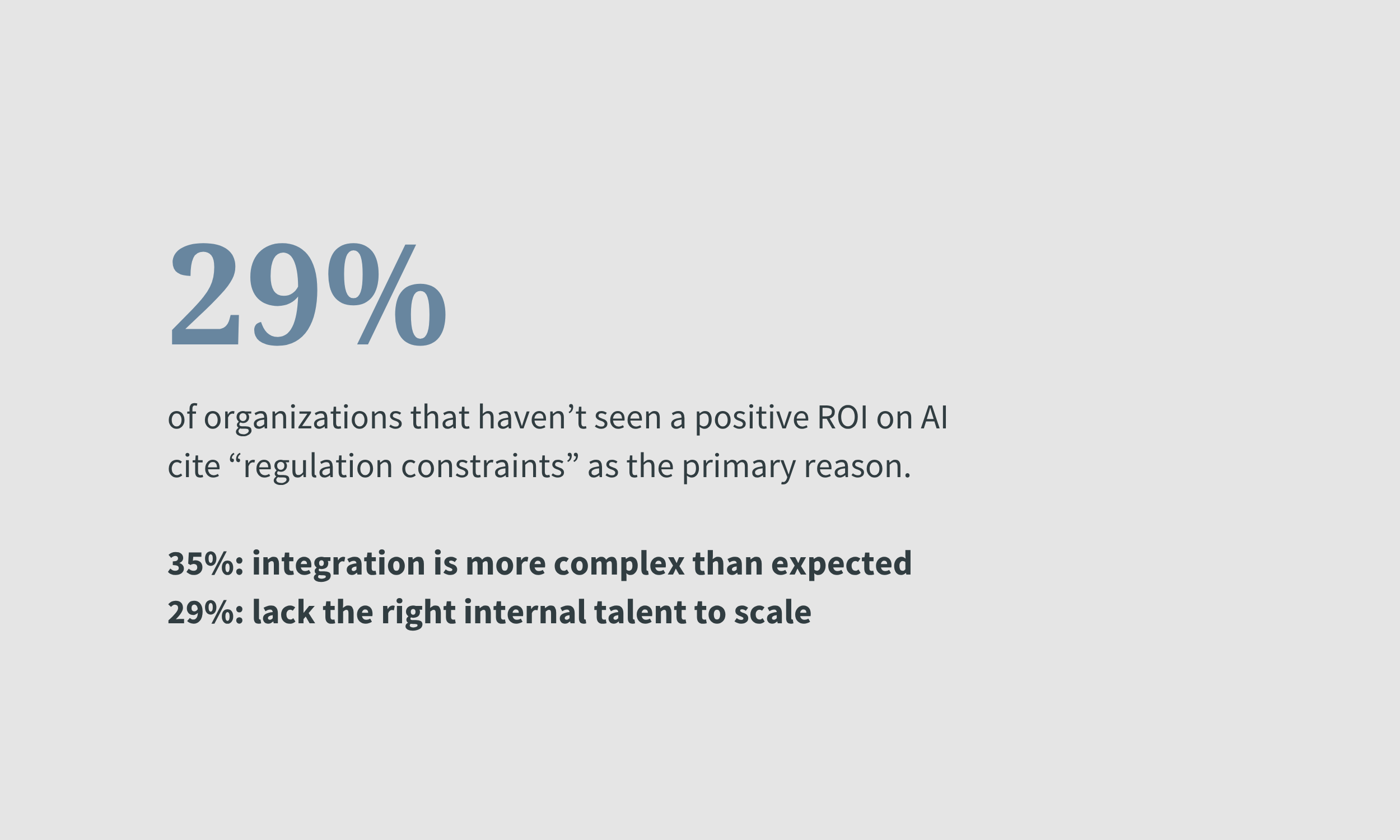
For buyers in financial services, healthcare, or other regulated industries, these constraints fundamentally shape what's possible. The conversation isn't "should we adopt your AI solution?" It's "how do we adopt AI within constraints that won't change, regardless of what vendors promise?"
What This Means for Marketing AI Solutions
“Are we using AI to improve the past or invent the future?”
When executives simultaneously believe AI doesn't currently demonstrate sufficient ROI and "we can't fall behind," conventional demand generation will fall short. You can't just articulate value propositions. You need to help buyers work through ambivalence before they're ready to engage confidently.
You need to paint the future.
Throughout 2025, advisory boards revealed how buyers think about AI adoption—the concerns they voice with peers, the organizational dynamics that slow decisions, the constraints that shape what's possible. These conversations happen because advisory boards create conditions where executives can acknowledge difficulty, express uncertainty, and work through real constraints without it becoming part of a vendor evaluation.
When advisory board members describe governance pipelines, regulatory constraints, or measurement framework challenges, they're revealing buying criteria that matter most—criteria that may never appear, let alone get addressed sufficiently, in RFPs.
Understanding how buyers think about these challenges changes how you position, message, and create demand. Not because you can address every concern in your product marketing, but because you understand which concerns are legitimate barriers versus which reflect the uncertainty they need help working through.
Looking Ahead to 2026
We expect the AI conversation will continue throughout our 2026 board meetings, evolving to include:
AI governance. The technology moves faster than regulatory frameworks and corporate governance structures. Organizations need to figure out where AI and autonomous agents can operate and where human oversight remains mandatory—in specific operational contexts, not in theory.
AI-driven customer experience as differentiation. The battleground is shifting beyond AI for internal productivity to customer-facing applications. But how do organizations deploy AI with customers without eroding trust.
Workforce transformation that builds capability. The productivity improvements may prove real. The harder question is how you restructure roles and compensation when AI proficiency challenges traditional models.
A quantum leap. Our Boards are divided on when exactly quantum will affect their organizations or require focused investment, but there’s an increasing drumbeat to figure out staffing for the quantum advantage future.
Create Space for These Conversations
The executives in our advisory boards aren't looking for vendors to solve these challenges alone—they are working through strategic complexity that requires thinking alongside peers facing similar constraints. That's precisely why these conversations matter now.
Your customers are navigating these tensions, and they're likely having similar discussions internally—or avoiding them because the path forward isn't clear. The organizations that move confidently on AI aren't necessarily the ones with the best technology roadmaps. They're the ones creating conditions where leadership can acknowledge difficulty, voice uncertainty, and work through constraints without it becoming a referendum on their judgment.
Understanding how buyers actually think about AI adoption—not just what they say in sales meetings—can help you provide solutions to real barriers. You can facilitate conversations that help them move from ambivalence to confident action.